Why Now Is One of the Best Times to Build a Multiplex in Ontario
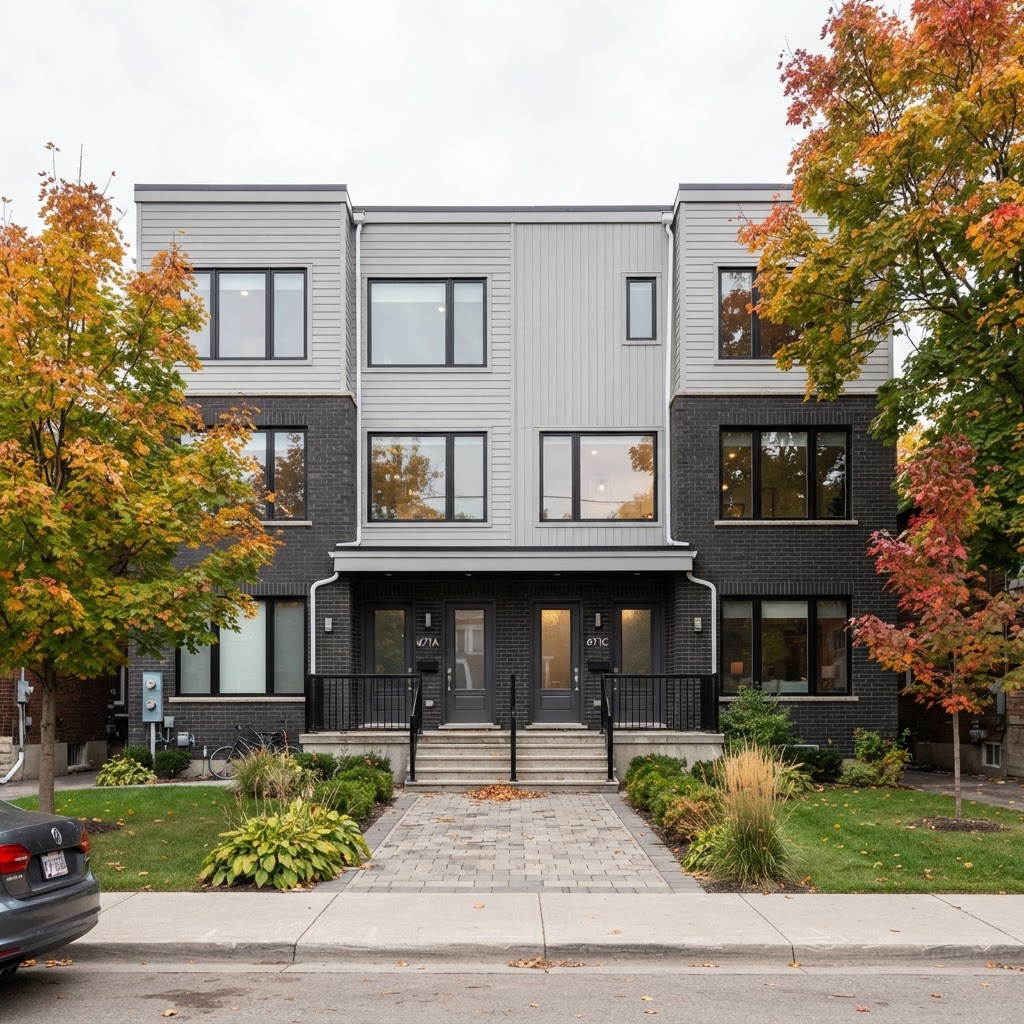
Ontario's housing policies, financial incentives, and expanding financing opportunities are creating new possibilities for homeowners and real estate investors to build multiplexes, generate rental income, and maximize the potential of their properties.
For years, building a duplex, triplex, fourplex, or larger multi-unit residential property in Ontario involved significant regulatory hurdles, development charges, financing challenges, and lengthy municipal approvals.
Today, the landscape is changing.
With expanded as-of-right zoning permissions, development charge exemptions, potential HST rebates, and attractive construction financing programs, Ontario has created a more favourable environment for small-scale residential development.
For homeowners and investors looking to build a multiplex in Toronto or the Greater Toronto Area (GTA), these changes can make a meaningful difference to project feasibility and long-term investment returns.
1. HST Rebates: Significant Potential Savings for Multiplex Investors
One of the biggest financial considerations when constructing a new multiplex is the Harmonized Sales Tax (HST).
Fortunately, qualifying newly constructed residential rental properties may benefit from substantial HST rebates through federal and provincial programs.
The federal Enhanced GST Rental Rebate can provide a 100% rebate of the 5% federal GST component for eligible new purpose-built rental housing, subject to program requirements and construction timelines.
Ontario also offers a provincial rebate framework for qualifying purpose-built rental housing, potentially providing relief on the 8% provincial component of HST.
For qualifying developments, these incentives can represent significant savings and improve overall project economics.
However, eligibility depends on factors such as the number of residential units, rental arrangements, construction dates, and applicable program rules. Not every duplex, triplex, or fourplex will qualify for the enhanced rebates.
Why this matters: Reducing unrecoverable HST can improve project cash flow, lower the effective development cost, and make rental housing investments more financially attractive.
2. Development Charge Exemptions: Lower Upfront Construction Costs
Development charges are municipal fees collected to help fund infrastructure associated with new development, including roads, water services, and other community facilities.
Historically, these charges could add substantial costs to residential development projects.
Ontario has introduced important development charge exemptions and reductions for certain additional residential units and qualifying rental housing developments.
For eligible multiplex projects, these exemptions can significantly reduce municipal fees that would otherwise be payable.
Depending on the municipality, property configuration, and proposed development, some projects may qualify for a full exemption from applicable development charges, while others may qualify for partial reductions.
This is particularly relevant for property owners looking to add residential units to existing properties or redevelop eligible residential lots.
Why this matters: Lower municipal development charges mean less capital required upfront, allowing investors to allocate more of their budgets toward construction quality, financing, and long-term property performance.
3. As-of-Right Zoning: Making Multiplex Development Easier
Perhaps one of the most important changes to Ontario's housing landscape is the expansion of as-of-right zoning.
Traditionally, many residential neighbourhoods were restricted primarily to single-detached homes. Constructing multiple residential units often required rezoning applications or other lengthy municipal approvals.
Ontario's planning reforms have expanded permissions for additional residential units, while municipalities such as Toronto have introduced broader multiplex zoning permissions.
In Toronto, multiplexes containing up to four residential units are permitted as-of-right in many residential areas, subject to applicable zoning regulations and building requirements.
This means qualifying projects can proceed without a site-specific rezoning application.
As-of-right permissions do not eliminate the need for building permits or compliance with zoning standards, the Ontario Building Code, and other applicable regulations.
However, they can substantially simplify the planning process.
Why this matters: Reduced zoning uncertainty can shorten project timelines, lower planning costs, and give homeowners and investors greater confidence when evaluating potential multiplex developments.
4. CMHC Financing and Competitive Construction Loans: Making Multiplex Development More Accessible
Another major advantage for multiplex investors is the availability of financing programs designed to support the construction of additional residential housing.
Between government-backed mortgage insurance programs and construction financing offered by Canadian banks and other lenders, property owners have several potential options to fund their projects.
CMHC MLI Select: Attractive Financing for Larger Multiplexes
The Canada Mortgage and Housing Corporation (CMHC) offers its MLI Select program to encourage the development of rental housing that meets affordability, energy efficiency, or accessibility objectives.
For qualifying rental developments containing five or more residential units, the program can offer significant financing advantages, including:
- Financing of up to 95% of eligible construction costs
- Amortization periods of up to 50 years, depending on the project's qualification score
- Potentially lower mortgage insurance premiums
- Opportunities to reduce the amount of upfront equity required
- Improved long-term cash flow through extended mortgage repayment periods
The actual financing terms depend on the project's eligibility, financial performance, lender approval, and CMHC requirements.
For investors considering fiveplexes, sixplexes, or larger rental developments, CMHC-insured financing can be an important component of the investment strategy.
Financing Opportunities for Duplexes, Triplexes, and Fourplexes
Smaller multiplex developments can also benefit from favourable financing options.
CMHC's refinancing program for adding secondary suites allows qualifying homeowners to access insured refinancing of up to 90% of the property's eligible lending value, including qualifying improvements.
The program supports properties containing up to four residential units upon completion, with amortization periods of up to 30 years.
It is intended for existing homeowners adding legal, self-contained units, with owner-occupancy and other eligibility requirements. It is not a general-purpose financing program for all investor-owned fourplex construction projects.
Construction Financing Through Canadian Lenders
Beyond CMHC programs, Canadian banks, credit unions, and specialized construction lenders offer financing solutions for residential development.
Depending on the lender and project, available financing structures may include:
- Construction mortgages with funds advanced through progress draws
- Financing based partly on the projected completed value of the property
- Land acquisition and construction financing
- Short-term construction loans followed by long-term mortgage refinancing
- Rental income considerations when evaluating permanent financing eligibility
For qualified borrowers, these financing options can reduce the need to fund the entire construction cost using personal capital.
A common investment strategy is to obtain construction financing, complete the multiplex, stabilize rental occupancy, and explore refinancing into a long-term mortgage.
The availability and terms of these loans depend on factors such as borrower qualifications, project economics, property value, rental income, and lender underwriting.
Why this matters: With CMHC programs and a range of institutional and specialized construction lenders, investors have more potential financing structures to consider when planning a multiplex development.
5. Turn a Single Property Into Multiple Income-Producing Units
Beyond government incentives and financing programs, multiplex development offers a compelling opportunity to maximize the value of residential land.
Instead of maintaining a single-family property, owners may be able to develop multiple self-contained rental units on the same lot.
Depending on the property's size, location, zoning, and design, a multiplex can offer:
- Multiple independent rental income streams
- Improved utilization of valuable urban land
- Potential long-term property appreciation
- Greater flexibility for multigenerational living
- Opportunities to refinance based on the completed property's value and income
- A more diversified rental investment compared with a single tenancy
In established neighbourhoods throughout Toronto and the GTA, multiplex construction can create additional housing without requiring large-scale land assembly.
For investors, the combination of rental income, potential refinancing opportunities, and long-term asset ownership makes multiplex development an attractive strategy worth evaluating.
6. Why Working With an Experienced Multiplex Builder Matters
Although Ontario's regulatory and financing environment is becoming more favourable, successfully developing a multiplex still requires careful planning.
Construction costs, building design, fire separations, acoustic performance, servicing, financing, and municipal approvals all influence the success of a project.
At Multi Build Homes, we specialize in helping property owners navigate the process of building custom homes and multiplex developments throughout Toronto and the GTA.
Our team brings professional engineering knowledge, construction management experience, and hands-on residential building expertise to every project.
From early feasibility discussions and construction budgeting through permitting coordination and complete construction, our goal is to make the development process transparent, efficient, and predictable.
We understand that a successful multiplex is not simply about maximizing the number of units. It's about creating a well-designed, cost-effective property that performs as a long-term investment.
The Bottom Line: Ontario Is Opening the Door to Multiplex Development
With expanded zoning permissions, potential HST rebates, development charge exemptions, and increasingly accessible financing options, Ontario has created meaningful opportunities for homeowners and investors interested in small-scale residential development.
The combination of these incentives can make a significant difference to a project's overall economics.
While every property and project must be assessed individually, these changes can reduce financial and regulatory barriers that previously made multiplex construction more challenging.
If you've been considering converting a residential property into a duplex, triplex, fourplex, or larger multi-unit development, now is an excellent time to explore your options.
Thinking About Building a Multiplex in Toronto or the GTA?
At Multi Build Homes, we can help you evaluate your property's development potential, understand preliminary construction costs, and plan your project from concept to completion.
Contact us today to discuss your property, request a preliminary construction budget, or arrange a consultation with our team.
Disclaimer: Government incentives, tax rebates, zoning permissions, development charge exemptions, and financing programs are subject to eligibility requirements and change. Financing is subject to lender approval. Property owners should confirm applicable requirements with their municipality, financial institution, and qualified tax and legal advisors before making investment decisions.