Building a Custom Home or Multiplex? Why Choosing the Right Builder Is One of the Most Important Decisions You'll Make
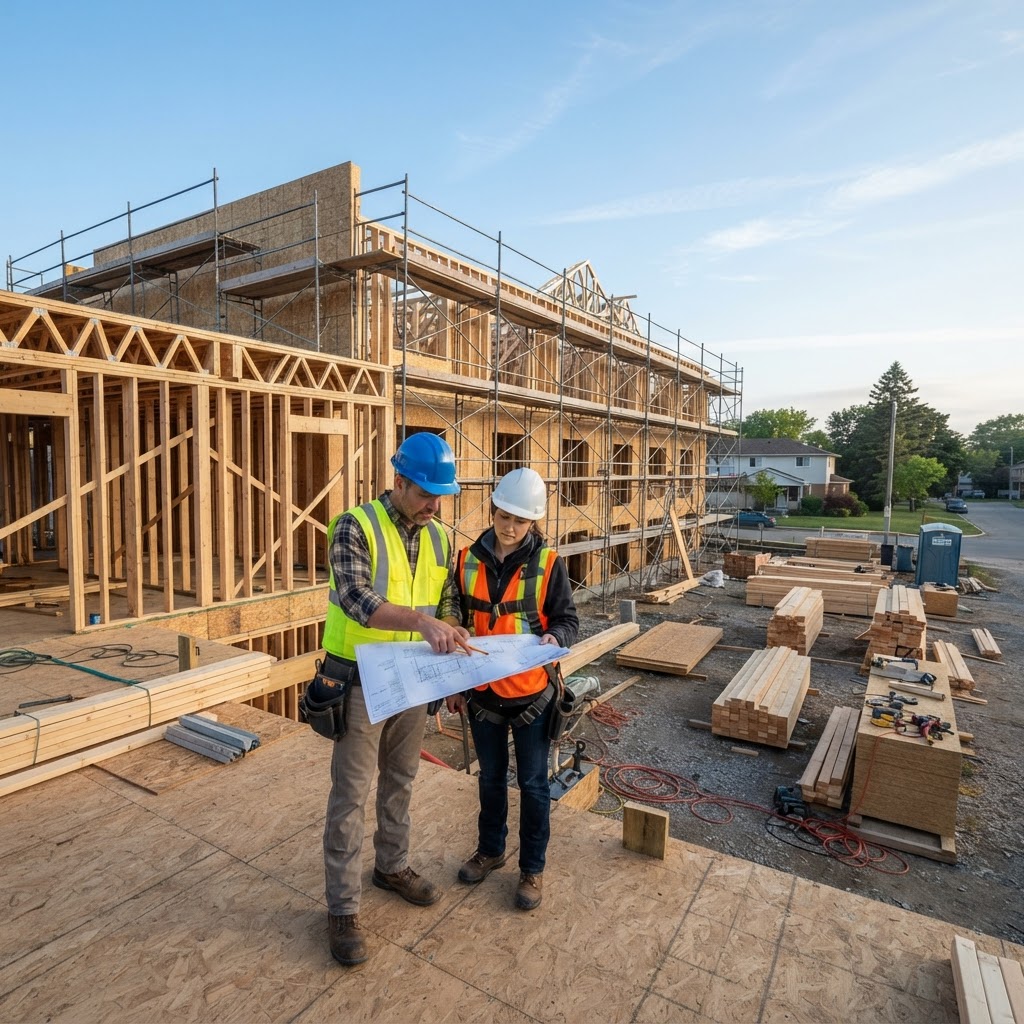
Construction is a significant investment. Choosing the right builder isn't just about getting the best price — it's about protecting your investment, managing risk, and working with someone you trust.
Whether you're building a custom home, multiplex, or investment property in Toronto or the Greater Toronto Area (GTA), selecting the right builder can make the difference between an enjoyable construction experience and a stressful, costly one.
Most property owners spend considerable time evaluating floor plans, finishes, construction budgets, and financing options. However, one of the most important decisions often receives the least attention: Who will actually be responsible for building your project?
At Multi Build Homes, we believe successful construction projects begin long before the first shovel hits the ground. They begin with trust, transparency, professionalism, and a strong relationship between the client and builder.
1. Construction Comes With Risks — Your Builder Should Know How to Manage Them
Every construction project carries risk. Even with detailed drawings, an established budget, and a realistic schedule, unexpected challenges can arise.
Some of the most common construction risks include:
- Budget overruns: Unanticipated site conditions, design changes, material price fluctuations, and poorly defined scopes of work.
- Schedule delays: Permit issues, subcontractor availability, material lead times, inspections, and unforeseen construction conditions.
- Quality concerns: Poor workmanship, inadequate supervision, improper installation methods, and insufficient quality control.
- Contractual disputes: Unclear agreements, unexpected change orders, payment disagreements, and misunderstandings about responsibilities.
- Coordination challenges: Conflicts between architectural, structural, mechanical, and electrical drawings that can result in expensive rework.
- Financial risks: Poor cash flow management, inaccurate cost estimates, and inadequate contingency planning.
An experienced builder cannot eliminate every risk. However, they should be able to anticipate potential issues, communicate them clearly, and develop practical solutions before small problems become expensive ones.
The difference between a good builder and a great builder is often how they manage problems when things don't go according to plan.
2. The Lowest Construction Quote Isn't Always the Best Value
When comparing construction proposals, it's natural to focus on the bottom line.
However, a lower initial price doesn't necessarily mean a lower final construction cost.
Two builders may quote the same project at significantly different prices because they're making different assumptions about materials, labour, allowances, exclusions, or the scope of work.
A proposal that appears attractive initially may become considerably more expensive once construction begins.
Before selecting a builder, consider asking:
- Is the construction scope clearly defined?
- Are material specifications and finishes identified?
- What allowances have been included?
- How are changes and additional costs handled?
- Is the proposed construction schedule realistic?
- What items are specifically excluded from the contract?
A professional builder should be willing to walk you through their proposal, explain the pricing structure, and help you understand exactly what you're paying for.
Transparency during the estimating stage is often a good indication of what you can expect throughout construction.
3. Your Relationship With Your Builder Matters More Than You Think
Building a custom home or multiplex is not a one-time transaction.
Depending on the complexity of the project, you may be working closely with your builder for several months or even years.
You'll be making important decisions together, discussing budgets, selecting materials, resolving challenges, and navigating the inevitable changes that occur during construction.
That's why we believe the relationship between a client and builder is just as important as the builder's technical capabilities.
Ask Yourself: Did You Actually Get Along With Your Builder at the First Meeting?
This might sound like a simple question, but it's an important one.
Think back to your first introductory meeting with a prospective builder.
Did they listen to your ideas and concerns? Were they approachable and easy to communicate with? Did they take the time to understand your goals, or were they simply trying to sell you a construction contract?
Did you feel comfortable asking questions?
Perhaps most importantly, could you see yourself working with this person regularly for the next 12 to 18 months?
A good working relationship doesn't mean you'll always agree on everything. Construction involves difficult decisions, competing priorities, and occasional disagreements.
What matters is whether you can have open, respectful conversations and work together toward practical solutions.
At Multi Build Homes, we value the relationships we develop with our clients. We believe the construction experience should be collaborative, transparent, and enjoyable — not intimidating or unnecessarily stressful.
You should feel comfortable picking up the phone and calling your builder, whether you have a concern, a question, or simply an idea you'd like to discuss.
4. Are You Hiring a Builder or a True Construction Professional?
Not all builders bring the same professional background, management experience, or approach to construction.
While hands-on construction experience is essential, successful project delivery also requires financial management, technical knowledge, contract administration, communication, and sound decision-making.
At Multi Build Homes, our team's background is somewhat different.
Before becoming builders, we established our professional careers in engineering and finance.
Our experience in these industries helped shape the way we approach residential construction today.
Engineering: A Technical and Problem-Solving Approach
Our engineering background brings a structured, analytical perspective to construction.
Engineering teaches the importance of planning, identifying risks, understanding technical requirements, coordinating multiple disciplines, and developing practical solutions.
These principles are directly applicable to residential construction, particularly when building complex custom homes and multiplexes.
Whether we're reviewing drawings, coordinating trades, evaluating structural challenges, or identifying potential construction conflicts, our technical background helps us approach decisions systematically.
Finance: Understanding the Investment Behind the Project
Our financial background brings another important perspective.
We recognize that a custom home or multiplex is often one of the largest financial commitments our clients will make.
For real estate investors, construction decisions also influence financing requirements, rental income, cash flow, and long-term investment performance.
Understanding the financial implications of construction allows us to approach projects with an emphasis on budgeting, cost control, financial transparency, and overall project feasibility.
We don't just look at what it takes to construct a building. We consider the financial and practical implications of the decisions made along the way.
Combining engineering, finance, and hands-on construction experience allows us to bring a well-rounded perspective to every project.
5. Communication and Transparency Should Never Be Optional
One of the most common frustrations property owners experience during construction is poor communication.
Unreturned phone calls, unclear invoices, unexpected costs, and uncertainty about project progress can quickly damage the relationship between a builder and client.
We believe clients should understand what's happening on their projects.
A professional builder should be able to provide clear information regarding construction progress, upcoming milestones, important decisions, and potential changes to the budget or schedule.
Equally important, they should be comfortable having difficult conversations when challenges arise.
If an unforeseen condition is discovered, the client should be informed promptly, understand the available options, and be involved in decisions that affect cost or scope.
At Multi Build Homes, our philosophy is simple:
No surprises where they can reasonably be avoided, no unnecessary confusion, and no hesitation to have an honest conversation.
We believe transparency builds trust, and trust is the foundation of a successful construction relationship.
6. A Good Builder Should Protect Your Interests, Not Just Complete the Work
A construction project involves hundreds of decisions, many of which may seem relatively minor at the time.
However, decisions regarding materials, waterproofing, insulation, soundproofing, mechanical systems, and construction sequencing can have significant long-term consequences.
A responsible builder should consider not only the immediate construction cost but also the long-term performance, maintenance, and durability of the finished property.
This is especially important for multiplex developments, where acoustic separation, fire-rated assemblies, mechanical servicing, and durable finishes can directly influence tenant satisfaction and ongoing operating costs.
A good builder should be comfortable explaining why certain materials or construction methods are recommended and helping clients evaluate the available alternatives.
Sometimes, spending slightly more during construction can prevent substantially greater expenses in the future.
Other times, a simpler and more cost-effective solution may achieve the same result.
The goal should always be to make informed decisions that balance quality, cost, performance, and long-term value.
7. Five Questions to Ask Before Hiring Your Builder
Before signing a construction agreement, take the time to evaluate more than just the proposed price.
1. Can I visit one of your completed or active construction projects?
Seeing a builder's work firsthand can provide valuable insight into construction quality, site organization, and attention to detail.
2. Who will actually be managing my project?
Understand who your primary contact will be, how often they'll be on-site, and who is responsible for coordinating subcontractors and resolving issues.
3. How do you handle unexpected costs and changes?
Ask how change orders are documented, approved, and communicated before additional work proceeds.
4. What is your professional background and experience?
Look beyond the number of homes completed. Consider the builder's technical knowledge, management capabilities, financial understanding, and experience with projects similar to yours.
5. Do I feel comfortable working with this person?
This question is often overlooked.
Trust your assessment of how the builder communicates, responds to questions, and treats you during the introductory process.
If communication is already difficult before the project begins, consider how that relationship may develop once construction becomes more demanding.
The Bottom Line: Choose a Builder You Trust
Building a custom home or multiplex should be an exciting and rewarding experience.
While construction will always involve some degree of uncertainty, choosing the right builder can significantly reduce unnecessary stress, improve decision-making, and help protect your investment.
Look for a builder who combines practical construction experience with professionalism, financial awareness, technical knowledge, and a genuine commitment to their clients.
And don't underestimate the importance of personal chemistry.
You're not simply hiring someone to build a house. You're choosing a partner who will help guide one of the most important investments you'll make.
At Multi Build Homes, our foundation in engineering and finance, combined with our passion for residential construction, shapes the way we approach every project.
We believe great homes are built through great relationships.
Let's Start With a Conversation
Considering building a custom home, duplex, triplex, fourplex, or larger multiplex in Toronto or the GTA?
We'd welcome the opportunity to meet, learn about your project, and discuss how we can help bring your vision to life.
Whether it's a coffee, an introductory meeting, or a tour of one of our construction projects, we believe the best working relationships begin with a simple conversation.
Contact Multi Build Homes today. Let's get to know each other before we start building together.